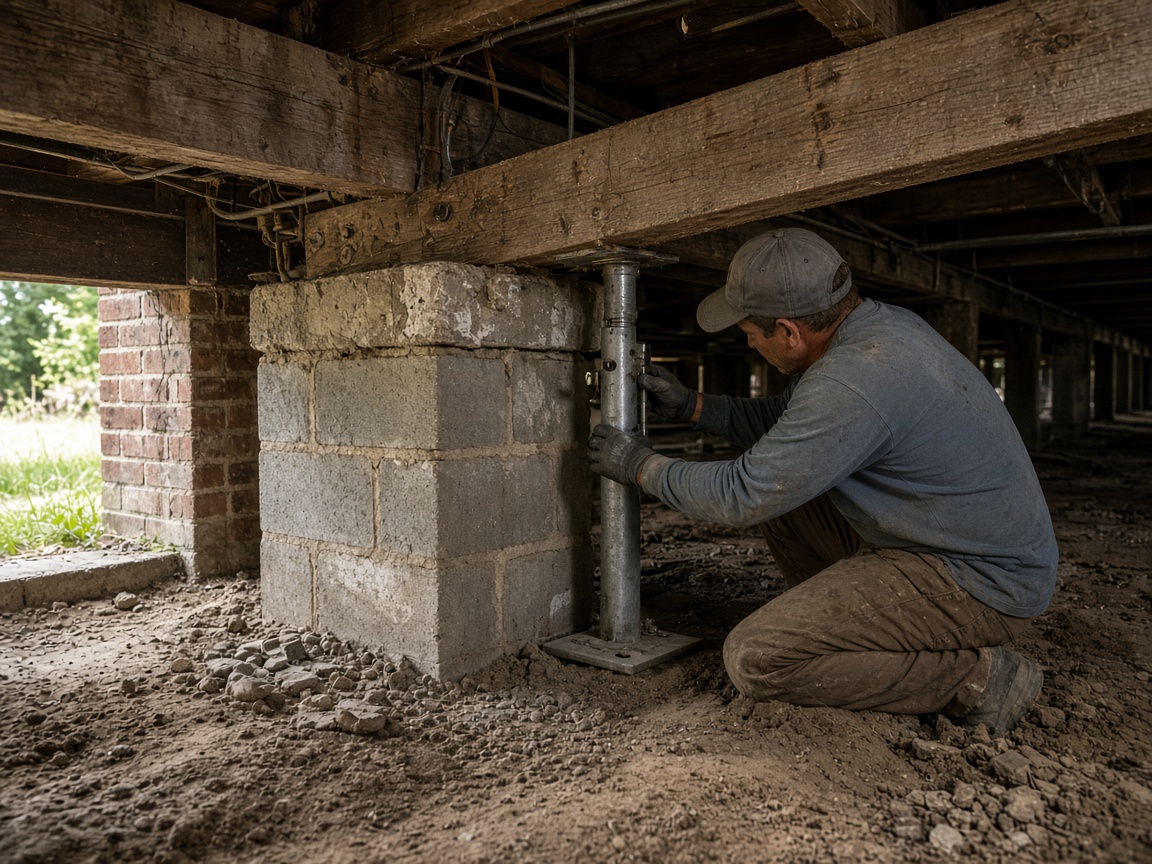
Pier and beam homes need a look beneath the floor as well as inside the rooms. A soft spot, sloping floor or door that rubs can come from weakened framing, settled supports, moisture or several issues at once.
The inspection should document crawlspace access, beam and joist condition, pier support and ground moisture. A proposed repair should distinguish structural work from drainage or ventilation measures, with the limits of each clearly explained.
Look below the floor first
Older homes in Lakewood, East Dallas, Oak Cliff and parts of the M Streets may have a raised foundation over a crawl space. A bouncy floor can come from a shifted pier, damaged beam or joist, moisture-related deterioration or a combination. An evaluation should document access, visible wood condition, support spacing and ground moisture before anyone promises a particular lift.
Separate support work from moisture work
A repair may involve resetting or adding supports, replacing damaged framing and adjusting shims. The right scope depends on what the crawl space actually shows. Ventilation, runoff and plumbing issues may also need attention; they are separate decisions from structural support. Ask how the proposed work will affect floor level, doors, utilities and finished surfaces. A perfectly level floor is not always a safe or realistic outcome in an older structure.
Dallas soil and the lot
Expansive clay can change the load on supports through wet and dry cycles. If rainwater drains under the house or a downspout discharges near a crawl-space opening, review foundation drainage and moisture control. Compare the two foundation types in slab vs. pier and beam in Dallas and see warning signs worth documenting. Return to the [Dallas foundation repair overview](/) or call 877-552-8556.