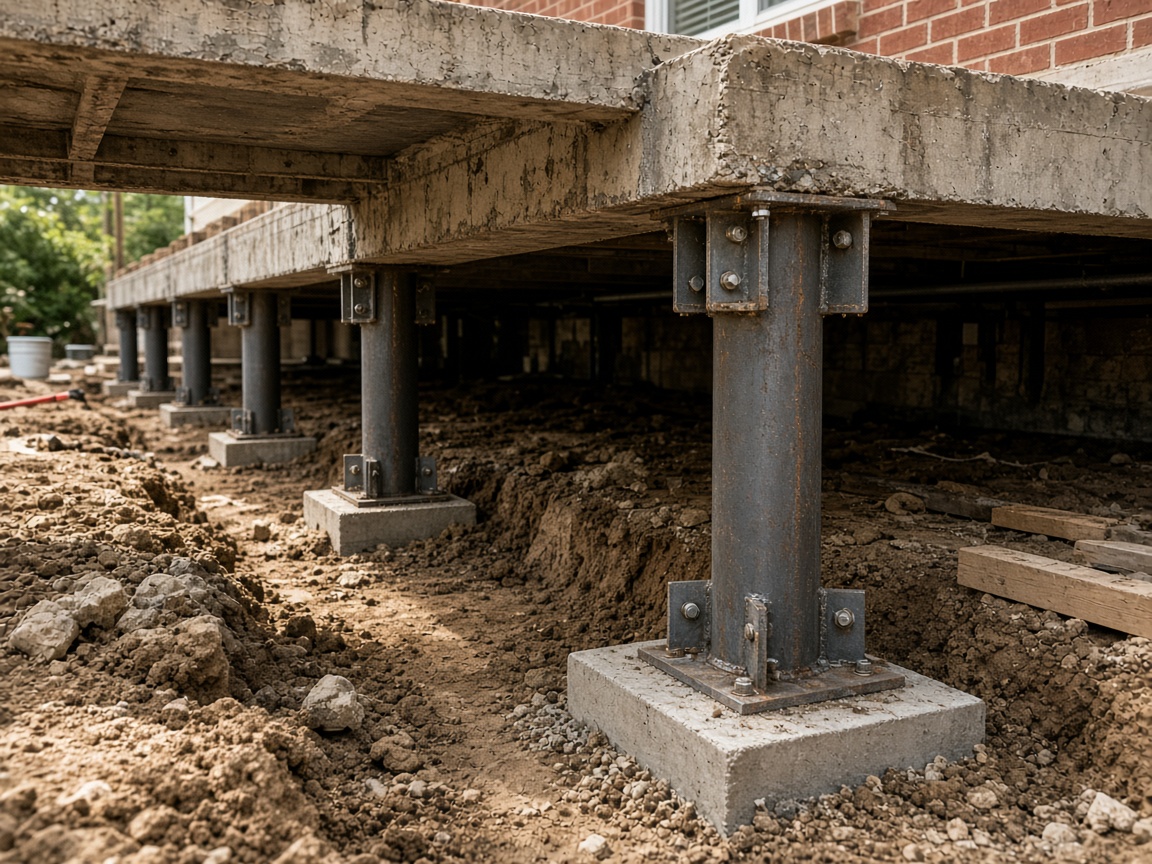
Piers and underpinning are considered when evidence shows that part of a foundation needs additional support. The choice of system and placement depends on the structure, access, soil and the movement pattern; a generic pier count is not a diagnosis.
Review where supports are proposed, whether interior access is needed, how utilities will be protected and what lifting limits apply. Ask for a diagram and a written scope so estimates can be compared on the same basis.
Where support may be needed
Piers are considered when measured settlement and the condition of the structure support a targeted stabilization plan. The number and location of piers should follow an elevation survey and a review of cracks, doors, drainage, plumbing and access. Soil movement across Dallas can vary even on the same lot. A generic pier count or a single crack photo cannot establish the scope.
Compare proposals on the same basis
Ask each contractor for a support layout showing interior and exterior locations, the proposed pier system, access and excavation, lift goals and limits, and how utilities and landscaping will be protected. Pressed concrete and steel systems have different installation details; the proposal should explain the choice for the site. Confirm whether patching, plumbing checks and drainage are separate line items.
Read the connected guides
Slab foundation repair explains the larger diagnosis. Why Dallas clay moves foundations covers the wet-dry cycle, while foundation drainage and moisture control addresses a contributing condition. Review the full [Dallas foundation repair](/) overview, then call 877-552-8556 to discuss measured movement and the proposed scope.