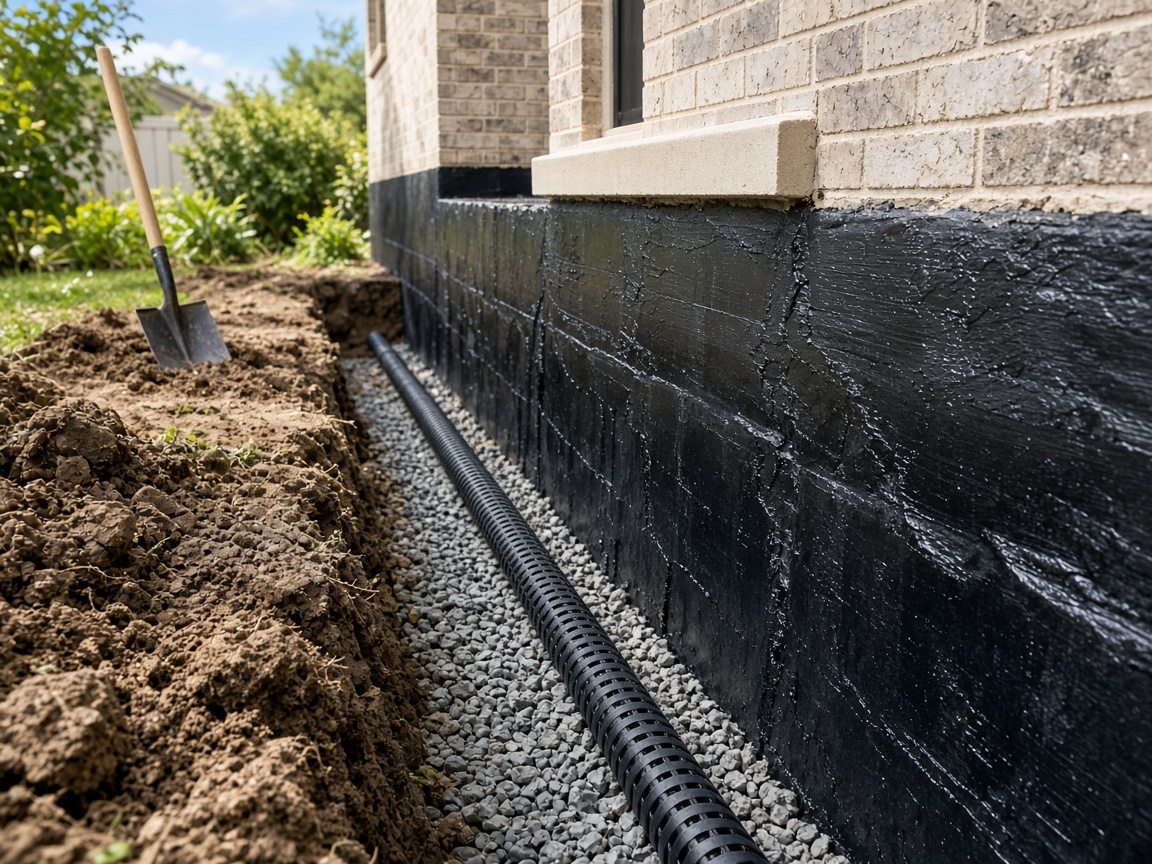
Runoff that pools beside a Dallas home or downspouts that discharge near the slab can create uneven moisture conditions. Dry periods can also affect expansive soils. The right response starts with where water flows and how it leaves the lot.
Possible measures include correcting surface drainage, extending downspouts or evaluating a drainage system when conditions support it. These measures should complement the structural diagnosis rather than stand in for it.
Follow the water after rain
Walk the perimeter during or soon after a storm. Note overflowing gutters, short downspouts, water trapped in planting beds, low spots and paving pitched toward the house. Dallas clay may swell when wet and shrink during a dry spell; concentrating water at one edge can make the moisture pattern uneven. Irrigation overspray and a possible plumbing leak belong in the same review.
Choose a measure that fits the site
A downspout extension or grading correction may solve a simple runoff problem. An area drain can address a low spot if there is a suitable outlet. A French drain requires a workable route, slope and discharge point, and is not the default choice for every yard. The proposal should state where collected water will go and whether access, hardscape or neighboring property affects the design.
Pair moisture control with structural diagnosis
Drainage work can address a contributing condition but does not automatically lift a settled slab or restore a sagging crawl-space floor. If cracks are widening or floors have shifted, review slab foundation repair or pier and beam foundation repair. Read foundation drainage and Dallas clay and why Dallas clay moves foundations for a homeowner checklist. See all options on the [Dallas foundation repair](/) page or call 877-552-8556.