A crack in a Dallas slab does not, by itself, identify the cause or the right repair. Movement can relate to soil moisture, drainage, plumbing leaks, tree roots or a combination of conditions. A useful inspection records floor elevations, visible distress and site drainage before recommending a repair scope.
If support work is appropriate, the proposal should identify affected areas, the support method and how access, lift and cosmetic repairs will be handled. Ask whether a plumbing evaluation or independent structural engineer is warranted before committing to major work.
What the Dallas assessment should cover
Slab movement is often linked to uneven moisture around expansive clay, but drainage is only one possible contributor. The first visit should identify the slab type, record floor elevations, map cracks and sticking doors, and walk the lot for standing water, downspouts, irrigation and signs of a possible plumbing leak. New symptoms after a wet spring or a dry August deserve attention; they do not establish the repair method on their own.
Support options and limits
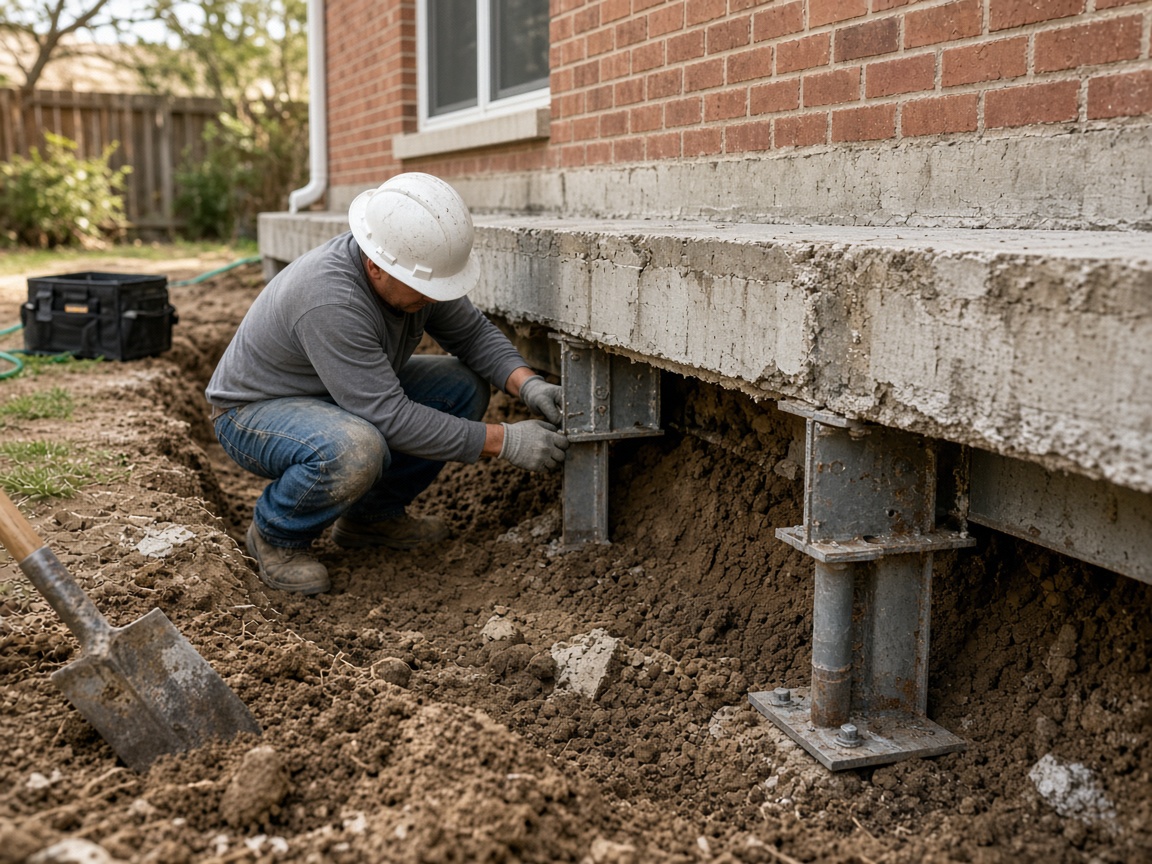
Pressed concrete and steel pier systems are among the support methods considered for a settled perimeter. Placement, depth, access and any proposed lift should follow the measured movement and site conditions. A post-tensioned slab requires special care before any cutting or drilling. Ask what part of the home will be supported, what movement can reasonably be corrected and whether finishes or plumbing work are included. An independent structural engineer can be helpful for complex or conflicting proposals.
Keep the soil moisture pattern in view
Downspouts that end beside one corner and grading that slopes toward the house can keep one edge wetter than another. Review foundation drainage and moisture control as part of the plan. For background, read why Dallas clay moves foundations and the signs that warrant a closer inspection. The main [Dallas foundation repair](/) page covers the full set of services. Call 877-552-8556 to discuss a slab concern.